
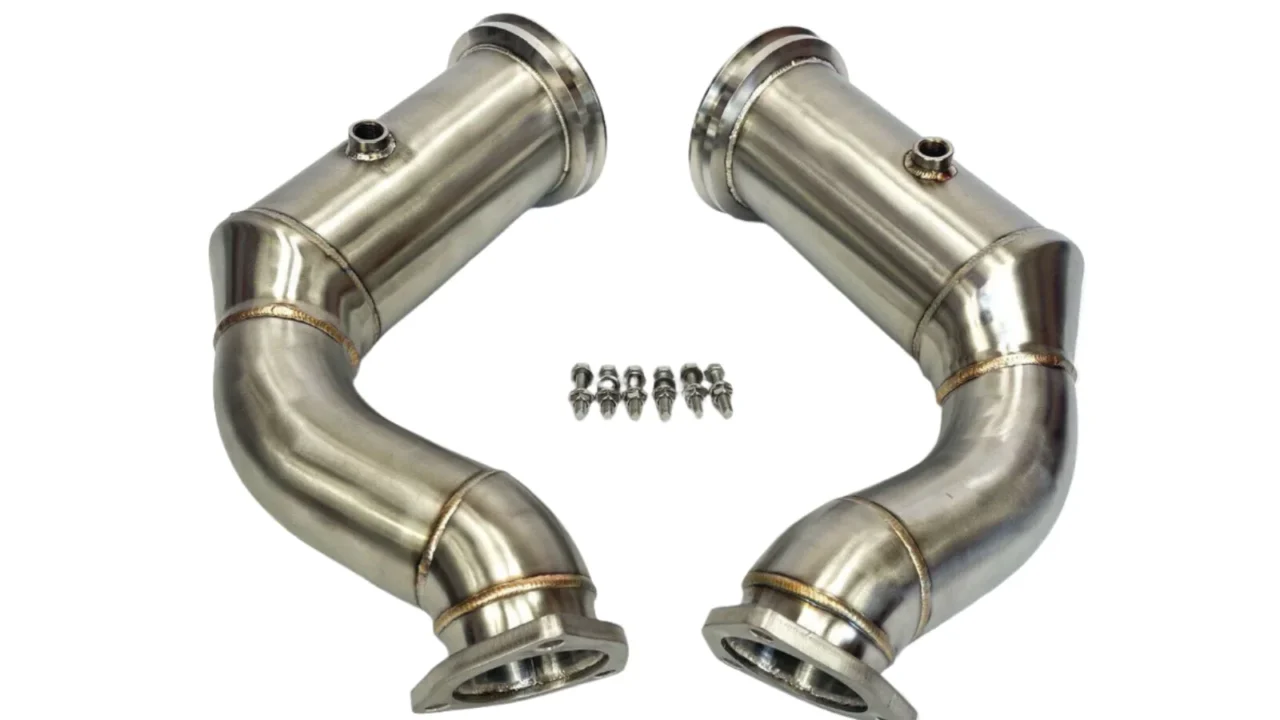
Performance cars are built to deliver an experience that goes beyond getting from one place to another. The sound of the engine, the response under acceleration, and the way power builds through the rev range all contribute to the character of a vehicle. For owners of high-performance Audi and BMW models, the exhaust system is an important part of that experience. Downpipes, in particular, attract attention because they can influence exhaust flow, sound, and the overall performance setup.
Whether someone drives an Audi RSQ8, SQ7, RS6 C8, or the latest BMW M5 G90 / G99 Touring, choosing suitable downpipes requires more thought than simply looking for the loudest option. Compatibility, engineering quality, installation, and local regulations all matter. A well-planned upgrade should complement the car rather than create problems that outweigh the benefits.
Understanding What Downpipes Actually Do
A downpipe connects the turbocharger outlet to the rest of the exhaust system. In a turbocharged engine, exhaust gases leave the turbine through this section before travelling through the remaining exhaust components. The design and diameter of the pipe can affect how efficiently those gases move.
Factory downpipes are developed around several requirements, including emissions compliance, noise limits, durability, and everyday driving comfort. Aftermarket versions may use different pipe diameters, bends, materials, and catalytic converter arrangements. These changes can influence exhaust flow and sound, although the actual results depend on the engine, supporting modifications, and calibration.
It’s worth remembering that a downpipe isn’t a magic performance upgrade. A poorly matched component can create fitment issues, warning lights, excessive noise, or unwanted changes in engine behaviour. Good engineering matters more than impressive marketing claims.
Audi RSQ8 and SQ7: Performance with Everyday Usability
The Audi RSQ8 and SQ7 share a performance-focused approach, but owners may have different expectations from their vehicles. Some want a deeper exhaust note and a more noticeable presence on the road. Others are interested in improving the overall exhaust setup while keeping the SUV comfortable enough for regular journeys.
When researching audi rsq8 sq7 downpipes , start by checking the exact vehicle specification. Model year, engine configuration, market version, and existing exhaust components can all influence compatibility. Even vehicles that appear similar on paper may require different hardware.
Material quality is another important consideration. Stainless steel is commonly used for performance exhaust components because it offers a useful balance of strength, heat resistance, and corrosion protection. Construction quality also deserves attention. Smooth bends, consistent welds, suitable pipe thickness, and secure mounting points contribute to a reliable installation.
Sound is often the most noticeable change after an exhaust modification. However, louder doesn’t automatically mean better. A deep, controlled tone may suit a large performance SUV more than an exhaust that produces constant cabin drone. Think about how the vehicle is actually used, not just how it sounds during a short acceleration video.
BMW M5 G90 and G99 Touring: A New Performance Platform
The BMW M5 G90 and G99 Touring bring a different set of engineering considerations. The G90 sedan and G99 Touring share the latest M5 performance platform, but buyers should still verify application-specific fitment rather than assuming every exhaust component is interchangeable.
A complete downpipe system for bmw m5 g90 / g99 touring should be assessed as a complete package, not simply by its advertised pipe diameter or claimed power potential. Check the product specifications, connection points, material, included hardware, and whether the system is designed for the exact vehicle configuration.
Modern performance vehicles also rely on sophisticated engine management and emissions monitoring systems. Changes to exhaust components may affect sensor readings, diagnostic behaviour, and vehicle calibration. Any supporting software changes should be discussed with a qualified specialist who understands the particular BMW platform.
For a vehicle that combines high performance with everyday practicality, refinement deserves attention. An upgrade should work with the character of the M5 rather than making the car tiring during long motorway journeys. That balance is especially relevant for drivers who use the Touring model for family travel, luggage, and regular commuting.
Audi RS6 C8: Why Fitment and Engineering Matter
The Audi RS6 C8 has developed a strong following among enthusiasts who appreciate its combination of estate-car practicality and serious performance. Its turbocharged powertrain gives owners plenty to explore when considering exhaust modifications.
Interest in audi rs6 c8 downpipes often comes from drivers looking for a different exhaust character or a revised performance setup. Before choosing a product, confirm that it has been developed specifically for the RS6 C8 and the relevant model year. A component intended for another Audi platform may look similar but still have different connections, clearances, or sensor positions.
Heat management is particularly important in a high-output vehicle. Exhaust components operate under demanding temperatures, and surrounding parts must have adequate clearance and protection. Installation should account for brackets, gaskets, fasteners, and the manufacturer’s recommended procedures.
Owners should also consider how a downpipe upgrade interacts with the rest of the exhaust system. A complete setup needs to work together. Pairing components without checking their specifications can produce an unpleasant sound or create avoidable installation complications.
What to Check Before Buying Performance Downpipes
Shopping for performance parts can be exciting, but a few practical checks can save considerable time and money.
Vehicle compatibility: Confirm the exact model, engine, model year, and regional specification. Ask the supplier to verify fitment using the vehicle details.
Material and construction: Look for clear information about the metal grade, welding quality, pipe design, and finish. Product photographs are useful, but detailed specifications are better.
Catalytic converter configuration: Understand whether the system retains suitable emissions equipment or changes the original arrangement. Regulations differ by location, and removing or altering required emissions equipment may make a vehicle illegal for road use.
Installation requirements: Ask whether specialist tools, replacement gaskets, additional hardware, or calibration work may be needed. Professional installation is advisable for complex modern performance vehicles.
Warranty and support: Check the manufacturer’s warranty, return policy, and availability of technical assistance. A supplier who can answer detailed fitment questions is generally more useful than one who only makes broad performance promises.
Installation, Calibration, and Responsible Ownership
Modern Audi and BMW performance cars contain advanced electronic systems. Exhaust modifications can influence emissions monitoring, diagnostic functions, and engine management. For this reason, installation should be handled by an experienced workshop familiar with the specific platform.
After installation, the vehicle should be inspected for leaks, unusual vibration, loose fittings, and warning messages. Any calibration work must be carried out responsibly, with attention to engine safety and applicable emissions requirements. Avoid disabling required monitoring systems or using software intended to conceal an emissions-related fault.
It’s also sensible to check local laws before purchasing parts. Roadworthiness requirements, emissions testing, and noise regulations vary between regions. A setup suitable for a closed-course vehicle may not be permitted on public roads.
Making a Better Long-Term Upgrade Decision
The best exhaust upgrade isn’t necessarily the most expensive or the loudest. It’s the one that suits the vehicle, meets the owner’s expectations, and is supported by sound engineering. Audi RSQ8 and SQ7 owners may prioritise a refined but purposeful exhaust note, while RS6 C8 drivers may want a balanced combination of sound and performance. BMW M5 G90 and G99 Touring owners should pay close attention to the requirements of the newer platform.
Take time to compare specifications, ask technical questions, and choose components designed for the exact vehicle. A thoughtful decision can make the ownership experience more rewarding without turning a sophisticated performance car into a collection of unnecessary compromises.
Ultimately, downpipes are only one part of a much larger performance system. Quality, compatibility, professional installation, and responsible road use should guide every decision. When those details receive proper attention, an upgrade has a much better chance of delivering the experience an enthusiast actually wants.
