Let’s face it—water is one of those things we don’t appreciate until it goes wrong. You open the faucet and suddenly, it smells weird. Or tastes off. Or leaves behind crusty white stains all over your sink. That’s when the “invisible problem” suddenly becomes very visible. The truth is, not all water is created equal, and not all treatment options work for everyone.
Whether your water comes from a deep country well or the city’s municipal grid, it carries a signature—minerals, chemicals, sometimes bacteria—that can affect everything from your laundry to your long-term health. So how do you know what to do about it? That’s where a bit of real talk on water treatment makes a world of difference.
The Realities of Well Water: It’s Yours to Manage
If you live outside city limits, chances are your water comes from a private well. That means there’s no local authority managing it—no automatic filtration, no testing, no alerts. Just you and whatever your ground delivers.
Now, that’s not necessarily a bad thing. Well water can be clean and rich in minerals. But it also comes with risks—things like iron, manganese, hydrogen sulfide (that rotten egg smell), or even bacteria like E. coli.
And because your well is open to the geology of your region, issues can change over time. One storm, one chemical spill miles away, one seasonal shift—and suddenly, your water is different.
That’s why well water treatment isn’t just a luxury—it’s a must. We’re talking filters, UV systems, softeners, or even whole-house reverse osmosis. The goal isn’t overkill. It’s tailored protection. Think of it like insurance for your plumbing, your appliances, your skin—and yeah, your peace of mind.
City Water Isn’t Always “Clean” Enough
So maybe you’re not on a well. You’re thinking, “I’m on municipal water—I’m good.” And yes, municipal water is regulated, tested, treated. It’s safe… technically.
But “safe” doesn’t always mean ideal. Most treatment plants use chlorine to disinfect, which is effective but can leave your water smelling like a swimming pool. There may also be trace levels of lead from old pipes, pesticides from upstream farms, or even pharmaceutical residues—yep, that’s a thing.
Enter municipal water filtration. These systems act like a final line of defense between you and your tap. Whether it’s a simple under-sink carbon filter or a whole-home unit with sediment control, filtration fine-tunes what the city starts. It removes tastes, odors, and impurities that, while not “dangerous,” are definitely not desirable.
For families with kids, pets, or sensitive skin, it can make a world of difference. Plus, filtered water just tastes better. (Coffee lovers, you know exactly what I’m talking about.)
Hard Water: The Annoying Culprit You Didn’t Know Had a Name
Let’s talk about hard water. You know those white spots on your glassware? Or that chalky ring around your faucets? That’s calcium and magnesium buildup. It doesn’t just make cleaning a nightmare—it can clog pipes, damage appliances, and dry out your skin like nobody’s business.
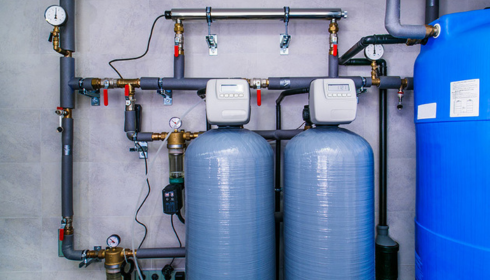
Hard water is common across the U.S., and while it’s not a health risk, it’s definitely a quality-of-life issue. That’s where water softening solutions come into play. A good softener uses ion exchange to swap out those hardness minerals, leaving your water “softer”—gentler on skin, better for soap, and far less harsh on your plumbing.
There are salt-based systems, salt-free options, and even combo units that tackle both hardness and contaminants. The right choice depends on your home, your water, and your lifestyle.
And don’t worry—softened water doesn’t taste salty. It just feels smoother, rinses cleaner, and makes everything from your hair to your laundry behave better.
It’s Not One Size Fits All, and That’s Okay
One of the biggest mistakes people make with water treatment is assuming there’s a single fix. Like, “I bought a filter pitcher, so I’m good.” Well, not necessarily.
Water treatment is all about context. Where you live, what’s in your water, what you use it for—those details matter. A family in Phoenix dealing with high hardness has different needs than a rural cabin in Vermont with well water rich in iron.
Testing is step one. Not just guessing, but actual lab testing—whether in-home kits or third-party labs. Once you know what you’re working with, the right system practically chooses itself.
Don’t be afraid to mix and match—maybe a whole-home sediment filter combined with a kitchen RO system. Or a softener paired with UV protection. It’s your water. It should work for you.
What About the Environment?
Glad you asked. Water treatment, when done smartly, can actually help the environment. Filtered water reduces reliance on bottled plastic. Softened water improves appliance efficiency, saving energy. Efficient systems reduce wastewater. It’s a win-win.
Of course, you’ve got to be mindful. Some systems use salt, electricity, or produce discharge. But modern units are increasingly eco-friendly, with smart controls, regeneration cycles, and low-waste designs.
The key? Choose wisely. Maintain regularly. And remember—protecting your household shouldn’t come at the cost of your planet.
So, Is Your Water Doing Its Job?
It’s easy to ignore your water—until it annoys you, stains your stuff, or stops tasting right. But it doesn’t have to be that way.
With the right treatment—customized, tested, maintained—you can turn your water into an asset instead of a constant hassle. Whether you’re drawing from a backyard well or trusting the city to treat your supply, the final quality is still in your hands.