Most of us don’t think much about household water until it starts causing little annoyances. Maybe the shower glass develops white marks a day after cleaning, the kettle collects a chalky layer, or the tap water has a taste that makes you reach for a bottled drink instead. None of these problems necessarily means something serious is wrong, but they can make everyday routines less pleasant.
The tricky part is knowing what to do about it. There are filters, softeners, drinking-water systems, and plenty of products promising impressive results. Rather than choosing the first option that looks convincing, it helps to understand your water, identify the real concern, and build a treatment plan that suits your home.
Start With What’s Actually in Your Water
Water quality varies according to its source, local geology, treatment processes, and household plumbing. Two homes on the same street can sometimes experience different issues, particularly if one relies on a private well or has older pipes.
Hard water is a common example. It contains elevated levels of dissolved calcium and magnesium, which can leave deposits on faucets, showerheads, and glassware. Some homeowners also notice that soap doesn’t lather as easily or that laundry feels stiff after washing. These effects can be frustrating, but they don’t automatically mean the water is unsafe.
Other concerns require different solutions. Sediment may appear as visible particles, while iron can contribute to reddish-brown staining. Certain dissolved substances aren’t visible at all, so clear water should not be treated as proof that every possible contaminant is absent.
A suitable water test provides a more reliable starting point than appearance or taste alone. Depending on the water source and the concern, testing may examine hardness, pH, iron, bacteria, or particular contaminants. Municipal water customers can also review their utility’s published quality report, while private well owners should follow local testing recommendations.
Why a Whole-Home Approach Can Make Sense
Some water problems affect more than the kitchen faucet. Mineral deposits may appear in several bathrooms, sediment can collect in multiple fixtures, and certain characteristics of incoming water can affect appliances throughout the property.
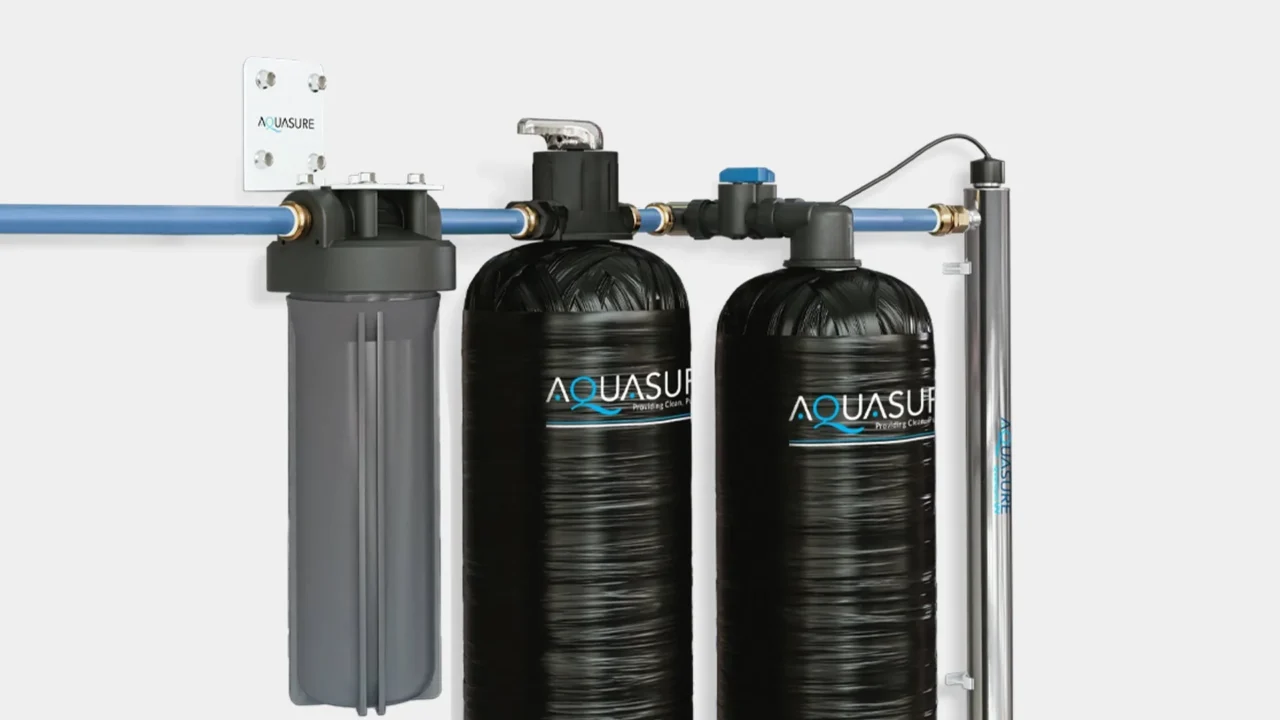
In these situations, whole home solutions may be worth exploring. Instead of treating water at only one tap, a point-of-entry system is installed where the supply enters the house. Depending on the equipment, it may address particular particles, tastes, odors, or other identified concerns before the water reaches different fixtures.
The important detail is choosing the right technology. A sediment filter captures particles, but it won’t reliably remove dissolved contaminants. Activated carbon can reduce certain tastes, odors, and selected compounds, while other treatment methods serve different purposes. No single system should be assumed to handle every water-quality issue.
Household demand matters as well. A home with several bathrooms and frequent simultaneous water use needs equipment capable of handling the required flow rate. An undersized system may restrict pressure, making showers and other daily activities less comfortable.
Before committing to a whole-house setup, ask which concerns it addresses, what performance documentation supports the recommendation, and how much maintenance it will require. These questions can prevent you from paying for components that offer little benefit.
Dealing With Hard Water at the Source
If mineral buildup is the main complaint, filtration alone may not solve the problem. Hardness comes primarily from dissolved calcium and magnesium, which can form scale as water evaporates or is heated.
Conventional water softeners address this issue through ion exchange. The system exchanges hardness minerals for other ions, commonly sodium, helping reduce scale formation and improve the way soap behaves during cleaning. Many households find that this makes bathroom cleaning easier and helps protect water heaters and other equipment from mineral deposits.
Still, softening is not the same as purification. A softener is designed mainly to reduce hardness, not to remove every unwanted substance. If testing identifies a separate concern, another treatment method may be necessary.
Sizing is worth careful attention. A unit that is too small may regenerate frequently, while a much larger model may add expense without a meaningful advantage. The right capacity depends on water hardness, household consumption, and the system’s specifications.
Traditional salt-based softeners also need regular regeneration and salt replenishment. Some homeowners have concerns about sodium in softened water, so it can be useful to discuss drinking-water preferences and plumbing arrangements with a qualified professional before installation.
When Whole-House Filtration Is the Better Fit
For homeowners dealing with particles, certain tastes, or other concerns that affect multiple taps, whole house water filters may offer a practical option. These systems treat incoming water before it travels through the home’s plumbing, although their capabilities depend on the filter media and design.
A sediment filter can capture suspended particles such as sand or rust. Activated carbon may reduce chlorine taste and odor, along with selected compounds. Other contaminants may require specialised equipment, so the filter should always be matched to the test results and the manufacturer’s verified claims.
Think about maintenance before buying. Some systems use replaceable cartridges, while others contain media that needs periodic servicing or replacement. Ask how often components should be changed, whether replacement parts are readily available, and whether the system is expected to affect water pressure.
It’s also important to distinguish aesthetic improvements from health-related treatment. A filter that improves taste does not necessarily make unsafe water safe to drink. If there are concerns about bacteria, lead, nitrates, or another specific contaminant, use appropriate testing and select equipment certified for that purpose.
Consider Drinking Water Separately
Even when the incoming water is treated throughout the home, you may want additional filtration for drinking and cooking. An under-sink carbon filter can be useful for reducing certain tastes and odors. Reverse osmosis may be suitable when testing identifies dissolved substances that a properly selected membrane system can reduce.
These options involve different trade-offs. Reverse osmosis systems commonly require prefilters and membrane replacement, and conventional designs send some water to the drain during production. Storage capacity and flow rate also affect convenience.
There is no need to add extra treatment simply because a product offers more stages. Choose based on the actual concern, verified performance, installation requirements, and ongoing costs.
Keep Your System Working as Intended
Installation is only the beginning. Filters gradually reach the end of their service life, softeners require routine attention, and some systems need periodic sanitation or performance checks. Ignoring maintenance can reduce effectiveness and make it harder to identify the cause of a problem.
Keep a record of installation dates, filter changes, and test results. Follow the manufacturer’s instructions, and investigate sudden changes in water taste, odor, color, or pressure rather than assuming they are normal.
If your water source changes or a private well experiences flooding or repairs, additional testing may be appropriate. Good maintenance is not complicated, but it does require consistency.
Make a Choice That Fits Your Home
A good water treatment setup should address a genuine concern without making household life more complicated. Begin with reliable information, compare suitable technologies, and consider installation and maintenance alongside the purchase price.
The most expensive system isn’t automatically the best fit. What matters is whether it treats the substances you need to address, performs as documented, and remains manageable over time. With a little planning, you can choose a practical solution that makes daily water use more comfortable and gives you greater confidence in the water flowing through your home.